


June has a particular cooking energy to it: the urgency of actual summer, when stone fruit and corn start hitting markets and your kitchen wants you to either grill everything or barely cook at all. Social media is reflecting that pull in opposite directions right now, toward both elaborate Korean-fusion projects and bare-minimum, one-pan weeknight rescues. The threads holding it all together this week are a serious embrace of fermentation, a renewed appreciation for the grill, and a recurring interest in making familiar comfort food lighter without making it worse.
Recipes Worth Making
Huli Huli Chicken

Huli huli chicken has been a Hawaiian roadside staple since the 1950s, when Honolulu businessman Ernest Morgado started selling marinated, grilled birds at fundraisers from a wire cage spit over charcoal. The name just means “turn, turn” in Hawaiian, which is the whole method: the chicken spins constantly while a pineapple-soy-ginger glaze reduces and caramelizes around it into something sticky and deeply savory-sweet. It is having a major summer 2026 moment, partly because home cooks are finally treating their backyards like proper outdoor kitchens.
The key is not the flip but the baste. Brush the glaze on every single turn, not just at the end, so each layer of caramelization builds on the last. Most recipes call for a mix of pineapple juice, soy sauce, ketchup, brown sugar, fresh ginger, and garlic, with a splash of sherry or mirin for depth. Thighs over breasts, always: they handle the heat and the acidity without drying out. Taste of Home has one of the cleaner versions of this recipe online.
Photo: Taste of Home
Cabbage Alfredo

Cabbage is the ingredient of the year, full stop. Pinterest reported a 45% surge in cabbage alfredo pins in early 2026, and the dish has been cycling through TikTok long enough that it has developed genuine recipe variations rather than just going viral once and fading. The premise: instead of pasta, you use thick ribbons of cabbage, sauteed low and slow until they go silky and almost translucent, then coat everything in a proper parmesan cream sauce. PureWow called it “2026’s answer to the 2016 zoodle craze,” and that comparison is apt, except cabbage actually tastes good and behaves in the pan.
The technique that makes it work is patience. You need a wide, hot pan and at least ten minutes of undisturbed contact time to get those ribbons soft enough to carry the sauce. Green or savoy cabbage both work; napa is too delicate. The alfredo itself is standard: butter, cream, and a mountain of fresh parmigiano. Where the dish opens up is with additions: some recipes bring in crispy pancetta, others lean into the cruciferous sweetness and add nutmeg or white pepper. This is genuinely comforting food that also happens to be lower in carbohydrates, which is how a dish earns staying power.
Photo: PureWow
Gochujang Chicken Burgers with Kimchi Bacon Jam
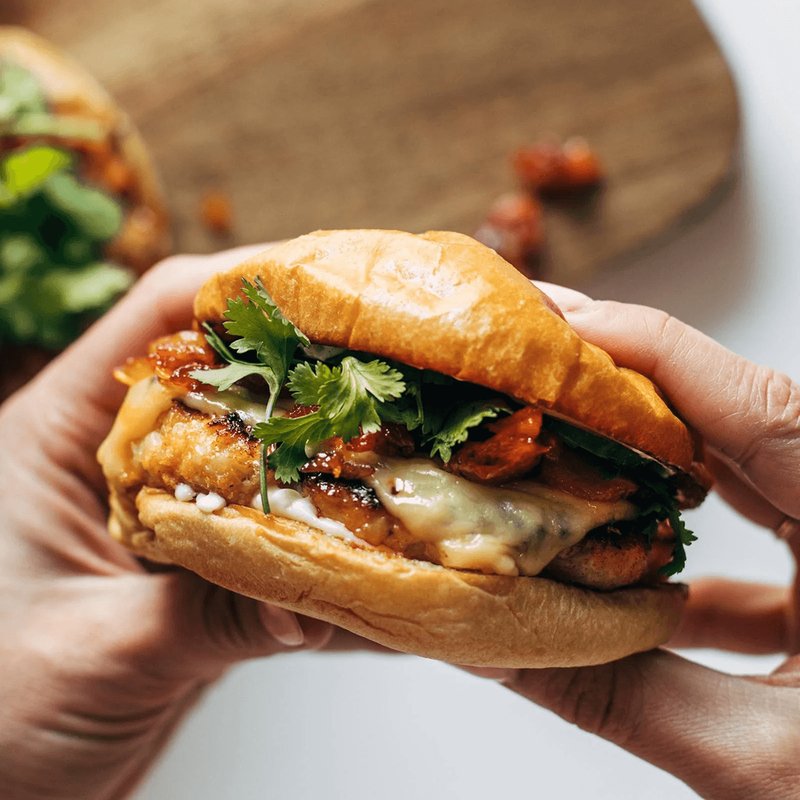
The Korean-American flavor wave that reshaped restaurant menus over the past decade has finally, fully arrived in the home cook’s repertoire. Gochujang chicken burgers are everywhere right now, and the Pinch of Yum version with kimchi bacon jam is the one people are actually cooking, because it commits to the combination rather than hedging. Ground chicken thighs mixed with gochujang paste, sesame oil, and garlic make a patty that is genuinely juicy, because the fermented pepper paste adds moisture along with its characteristic funky heat and depth.
The kimchi bacon jam is the real payoff: it takes about fifteen minutes on the stove, and the interplay between smoky pork, fermented kimchi, and a touch of brown sugar produces something that tastes like it belongs in a well-funded restaurant. An 85/15 ground chicken blend is the right call, and you can cook these in the air fryer on a weeknight without losing the crust. The whole thing comes together in under thirty minutes and is, at this particular cultural moment, exactly the flavor profile people want.
Photo: Pinch of Yum
Restaurants Worth Knowing About
Oyatte — New York City
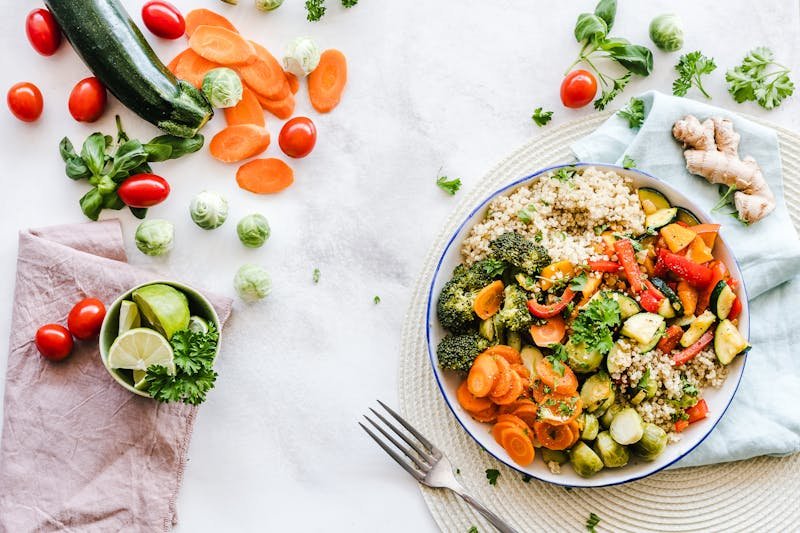
Chef Hasung Lee opened Oyatte in Murray Hill last month, and it is exactly the kind of debut that makes the New York restaurant scene worth paying attention to. Lee came up through The French Laundry, Atomix, Gramercy Tavern, and Geranium in Copenhagen, and his tasting menu reflects that biography: eight courses, structured as a physical journey through a two-level farmhouse-inspired space at 125 East 39th Street, with guests beginning downstairs for vegetable-focused courses before moving upstairs for proteins and desserts. The entire menu is built around Crown Daisy Farm, a single upstate New York property run by Brett Ellis, the former head farmer at The French Laundry.
The commitment to a single farm is not marketing language. Preservation techniques appear in nearly every course, fermentation runs through the menu as both flavor and philosophy, and the sourcing relationship is tight enough that the menu shifts week to week based on what is actually ready. At $210 per person, Oyatte is a special occasion destination, but it earns that category by doing something genuinely rare: tying fine dining to a specific piece of land rather than a generic idea of seasonal. Reservations at oyattenyc.com.
Photo: Oyatte NYC
ARLA — Chicago

The team behind Adalina Italian and Adalina Prime, which Robb Report named one of America’s Most Beautiful New Restaurants in 2025, is opening ARLA this summer at 15 East Oak Street in Chicago’s Gold Coast. Chef and Partner Soo Ahn, who earned a Michelin star at Band of Bohemia and appeared on Top Chef Season 21, is running the kitchen with a premise that sounds like a category error until you taste it: Mediterranean cuisine interpreted through Japanese techniques. The result, based on early reporting, is lighter fare built around seafood, vegetables, grains, and pastas, with intense flavors as the organizing principle.
The space is 8,500 square feet across two open-air terraces with unobstructed Chicago skyline views, and the interior pairs Mediterranean warmth with Japanese minimalism through wood, marble, sculptural gold, and patterned textiles. Ahn is the right chef to pull this combination off, because his sensibility has always been about restraint under complexity: dishes that taste edited even when significant technique is hidden inside them. ARLA opens this summer and is already one of the most-watched openings in the city.
Photo: Chicago Star Media / ARLA
So. Fox — Atlanta
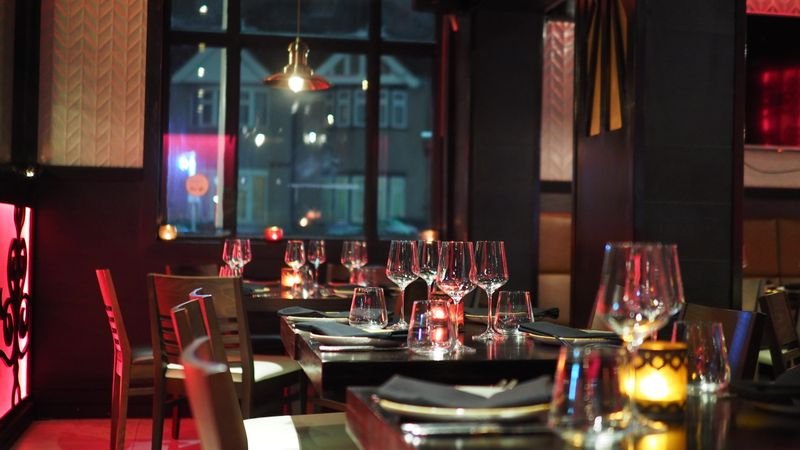
Chef Myles Moody and sommelier Rachael Pack opened So. Fox this spring at 1017 North Highland Avenue in Atlanta’s Virginia-Highland neighborhood, and the city’s food community has been paying close attention. Moody and Pack met while working at the two-Michelin-starred Aska in New York, and both have stints at Eleven Madison Park and Blue Hill at Stone Barns behind them. So. Fox, named for the Muscadine grape (the indigenous Southeastern varietal also called the Southern Fox), is their vision of what a 50-seat wine restaurant can do when it is genuinely casual and genuinely serious at the same time.
The menu reads like a love letter to the South told through fermentation. Bar snacks include oysters, house-fermented pickled vegetables, and warm Georgia olives finished in beef fat. Starters lean into earthy, wild combinations: drop dumplings with nettle, confit rabbit, and fermented young alliums. Because Kinship Butcher and Sundry is literally next door, Moody has access to exceptional lamb, pork, and beef cuts most restaurants have to fight for. Pack’s wine list skews natural and low-intervention, which matches the kitchen’s sensibility exactly. So. Fox opened ahead of its original projection and has been full ever since.
Photo: Pexels
Watch List
FOOD 2050
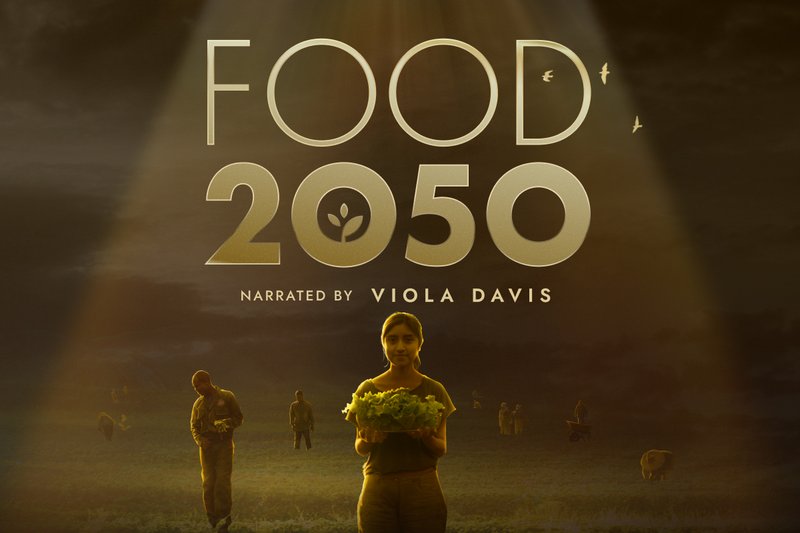
FOOD 2050, narrated and executive produced by Viola Davis, premiered at the Academy Museum in Los Angeles in January 2026 and has been moving through the festival and impact campaign circuit since. The Rockefeller Foundation documentary follows activists, scientists, farmers, and entrepreneurs across five continents as they work on the question of how the planet feeds 10 billion people by 2050, not in a dystopian way but in a rigorous, grounded, solutions-forward one. Davis told the press at the premiere: “I have never been more hopeful or more terrified at the same time.”
This is worth watching not because it will make you feel good in an easy way but because the food system is one of the most important stories being told right now, and this is one of the most serious treatments of it to come out of the documentary world in years. The film covers soil degradation, climate disruption, food access inequity, and regenerative agriculture without turning any of them into a talking point. Current screening and streaming information is at food2050film.com.
Photo: FOOD 2050 Film
Cook Well w/ Ethan Chlebowski

Ethan Chlebowski has been building one of the most methodologically interesting cooking channels on YouTube for years, and his current body of work under the Cook Well banner is the fullest expression of what he is going for. The approach is analytical without being cold: every video explains not just how to do something but why it works, backed by actual research rather than received wisdom. He tests variables, runs comparisons, and publishes his findings, which is rare in a format dominated by either aspirational aesthetics or pure entertainment.
If you have picked up frustrating cooking habits from YouTube, and most of us have, Cook Well is a useful corrective. Chlebowski’s videos on knife skills, protein cooking temperatures, fat rendering, and sauce-making are genuinely instructive in the way a good culinary school course is instructive, but without the institutional stuffiness. He is also honest when he changes his mind about a technique, which is the real mark of someone who takes the craft seriously. Find him at youtube.com/@CookWellCo.
Photo: Cook Well / YouTube
Virgilio — Netflix
If you have not yet watched the Virgilio documentary on Netflix, now is the time. The film follows Virgilio Martinez, the Peruvian chef whose restaurant Central has topped the World’s 50 Best list, on an expedition through the ecosystems of Peru to understand the ingredients, histories, and cultures that built his cooking. It is a food film in the tradition of the best Chef’s Table episodes, except it has room to breathe in ways a television episode never does, and Martinez himself is a genuinely compelling subject: driven, reflective, and clearly in the middle of something he has not fully figured out yet.
What makes this more than a chef hagiography is the way it frames cuisine as an act of listening. Martinez does not approach Peruvian ingredients as raw material for his creativity; he approaches them as things with histories that his cooking should be in dialogue with. That orientation, toward ingredients as cultural objects rather than components, comes up increasingly in conversations about where fine dining is heading, and Virgilio makes the case for it better than any manifesto could. Stream it on Netflix.
Photo: Pexels
Header photo: Smaart / Pexels — free to use under the Pexels License.