


The modern traveler in 2026 is defined by flexibility, self-reliance, and constant movement between environments.
Modern travel packing is a structured approach to selecting gear that supports road trips, outdoor exploration, and connected lifestyles without excess weight or wasted space.
Recent travel behavior data shows that more than half of long-distance travelers now combine road travel with outdoor activities and short-term remote work.
That shift changes what you pack, how you pack, and why every item must earn its place.
This guide explains how packing has evolved, what essentials matter most, and how lighting, technology, health gear, and safety tools fit together into a system that works wherever the road leads.
What Defines a Modern Traveler in 2026?
A modern traveler in 2026 is a person who moves between destinations using flexible transport while relying on compact, multi-use gear.
Travel is no longer linear.
You might drive for hours, camp overnight, work remotely in the morning, and hike by afternoon.
That reality changes expectations.
Equipment must be adaptable, durable, and easy to deploy.
Modern travelers prioritize modular packing, digital connectivity, personal safety, and energy efficiency.
Every item is selected based on function, not convenience.
How Has Travel Packing Changed Compared to the Past?
Travel packing has shifted from quantity-based lists to system-based selection.
Traditional packing focused on outfit variety and redundancy.
Modern packing focuses on performance, compatibility, and weight management.
Airline restrictions, vehicle-based travel, and outdoor integration push travelers toward fewer but smarter items.
Materials are lighter.
Electronics last longer.
The goal is no longer to prepare for everything.
The goal is to respond efficiently to anything.
What Are the Core Packing Categories Every Traveler Should Cover?
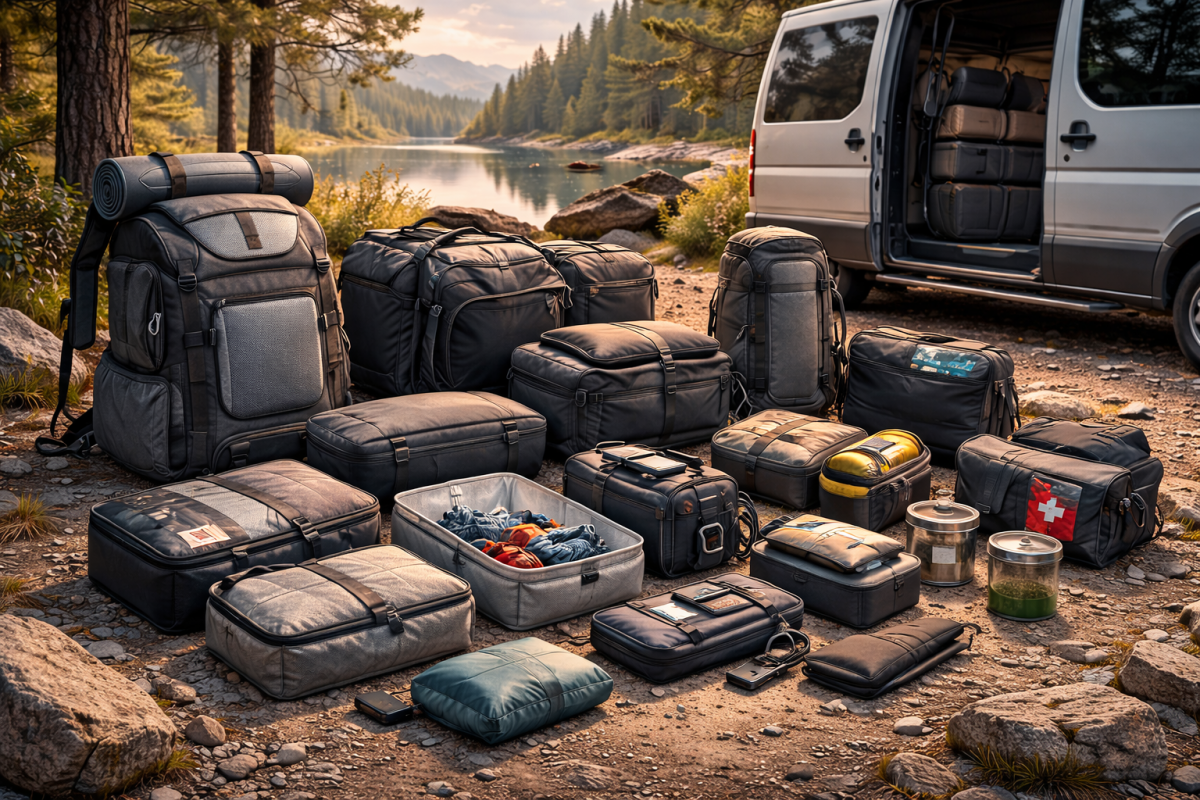
Travel packing categories are functional groupings that organize gear by purpose rather than by item type.
These categories include storage systems, clothing, technology, lighting, health, food, and safety equipment.
Each category supports a different aspect of mobility and comfort.
Organizing gear this way reduces overlap and eliminates unnecessary weight.
It also allows upgrades without rebuilding your entire setup.
Travel Bags and Storage Systems
Travel bags and storage systems are load-bearing containers that protect, organize, and distribute gear.
A proper system prevents damage, speeds up access, and maintains balance inside vehicles or on foot.
Oversized bags encourage overpacking.
Modern travelers choose structure over volume.
Backpacks, Duffels, and Hybrid Travel Bags
Travel bags are containers designed to transport gear across varied environments.
Backpacks prioritize mobility and weight distribution.
Duffels maximize volume and simplicity.
Hybrid bags balance structure with flexibility.
Road travelers often benefit from hybrid systems that load easily into vehicles while remaining wearable when needed.
Packing Cubes and Modular Organizers
Packing cubes are compartmental storage units that segment gear inside a larger bag.
They reduce clutter and prevent full unpacking during short stops.
They also efficiently separate clean and dirty items.
Main organizer types include:
- Clothing packing cubes for layering systems
- Compression bags for bulk reduction
- Tech pouches for electronics and cables
- Waterproof sacks for hygiene and wet gear
Clothing Essentials for Road and Outdoor Travel
Travel clothing is a category of garments selected for durability, adaptability, and climate versatility.
Modern travel clothing prioritizes layering instead of outfit changes.
Fabrics dry quickly and resist odor.
The right clothing system handles temperature swings without adding bulk.
How Do You Choose Clothing That Works Across Climates?
Climate-flexible clothing relies on layered insulation rather than single heavy garments.
A base layer manages moisture.
A mid-layer provides insulation.
An outer layer blocks wind and rain.
This structure allows adjustment without repacking and reduces total clothing volume.
Footwear for Long Drives and Outdoor Activities
Travel footwear includes shoes designed for extended wear, walking, and light outdoor use.
Main footwear categories include:
- Driving shoes for comfort and pedal feel
- Trail-capable sneakers for walking and hiking
- Lightweight boots for uneven terrain
One versatile pair often outperforms multiple specialized options.
Technology and Electronics Every Modern Traveler Needs
Travel technology includes electronic tools that support navigation, communication, safety, and productivity.
Modern devices are smaller and more energy efficient.
Battery life matters more than raw performance.
Technology should remove friction, not introduce dependency.
Precision Motion Control in Travel Tech and Gear
Modern travel gear relies on motion control to stay smooth, quiet, and reliable while moving through changing environments.
Motion control is the regulation of movement in mechanical and electronic systems that keeps adjustable components and smart travel devices working consistently on the road.
Behind many of these systems are servo drives from ADVANCED Motion Controls, helping travel technology handle vibration, temperature changes, and long hours of use without sacrificing performance.
Portable Power and Charging Solutions
Portable power solutions are energy storage systems that recharge devices away from fixed outlets.
Common solutions include:
- Power banks for phones and small electronics
- Vehicle chargers for continuous charging
- Compact solar panels for extended outdoor travel
Capacity, output type, and recharge speed determine suitability.
Navigation and Connectivity Devices
Navigation devices provide location awareness when network connectivity is unreliable.
Offline GPS units, downloaded maps, and signal boosters improve reliability.
Redundancy prevents a single failure from stopping movement.
Lighting and Visibility Essentials for Travel and Outdoors
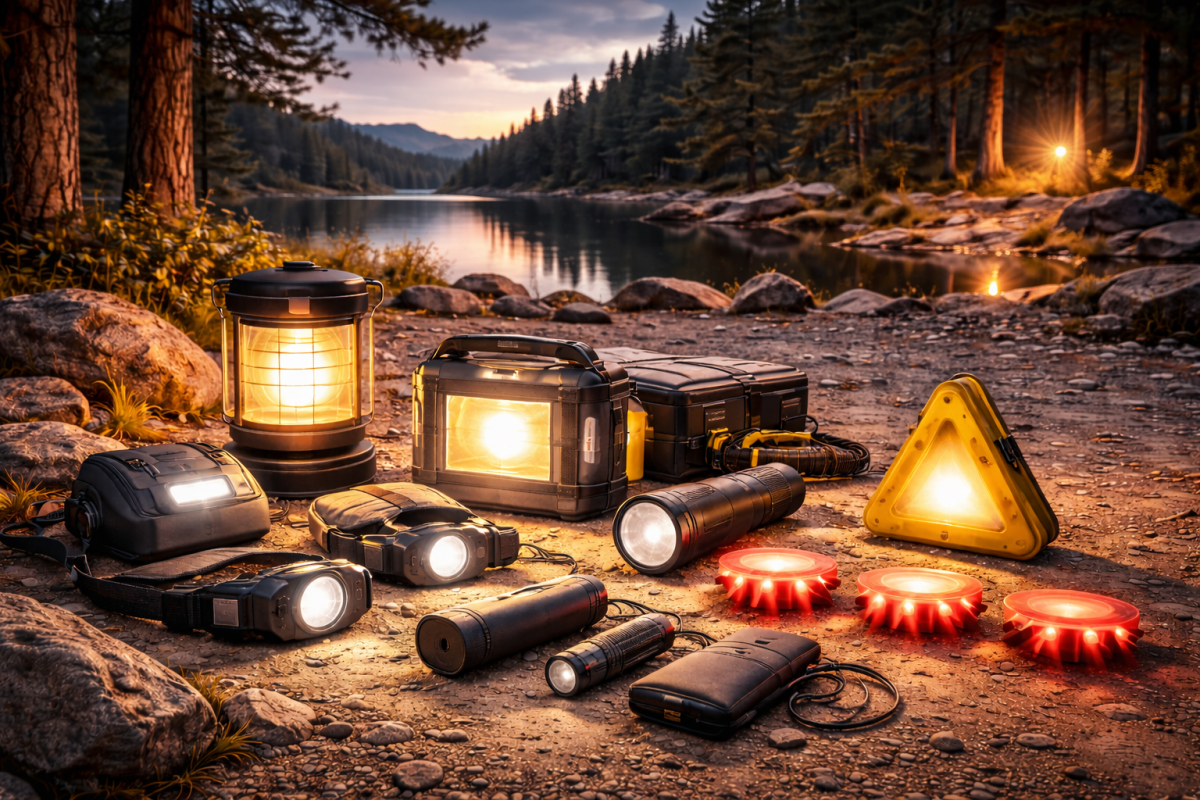
Travel lighting is a category of portable illumination tools that support safety, visibility, and task execution.
Lighting becomes critical after dark, during breakdowns, or in unfamiliar locations.
Efficient lighting improves safety while conserving power.
High-efficiency systems, such as LED lighting services, help demonstrate how low-energy lighting solutions deliver intense illumination without draining power resources.
Portable LED Lights and Headlamps
Portable LED lighting is a technology that converts electrical energy into visible light using semiconductor components.
LED lights are usable for campsite setup, vehicle repair, and nighttime navigation.
They deliver high brightness with minimal power consumption.
Rechargeable batteries and adjustable outputs increase versatility.
Emergency and Vehicle Lighting
Emergency lighting improves visibility and signals presence during roadside stops.
Everyday use cases include:
- Breakdown signaling
- Hazard marking
- Area illumination for repairs
Compact LED flares and magnetic work lights are especially effective.
Health, Fitness, and Personal Care on the Road
Travel health gear includes tools that support physical well-being during extended movement.
Long drives and irregular routines strain the body.
Simple recovery tools improve comfort and endurance.
Personal care systems should be compact and leak-proof.
Compact Fitness and Recovery Gear
Travel fitness gear includes lightweight tools designed for mobility and recovery.
Common options include:
- Resistance bands
- Massage balls
- Foldable exercise mats
These tools maintain circulation without taking up space.
Hygiene and Personal Care Essentials
Travel hygiene items are personal maintenance tools usable without full facilities.
Compact toiletry kits and refillable containers reduce waste while maintaining comfort.
Food, Hydration, and Cooking Essentials
Travel food systems support nutrition and hydration without fixed kitchens.
Self-sufficiency increases flexibility and reduces dependency on location.
Water access remains the priority.
Portable Cooking Tools and Utensils
Portable cooking tools are compact devices for preparing simple meals.
Common options include:
- Single-burner stoves
- Collapsible cookware
- Multi-use utensils
Fuel compatibility and storage safety guide selection.
Water Storage and Filtration
Water filtration is a technology that removes contaminants from untreated water sources.
Filters use physical barriers or chemical processes to make water safe.
Portable systems support travel through remote areas.
Safety and Emergency Gear for Modern Travelers
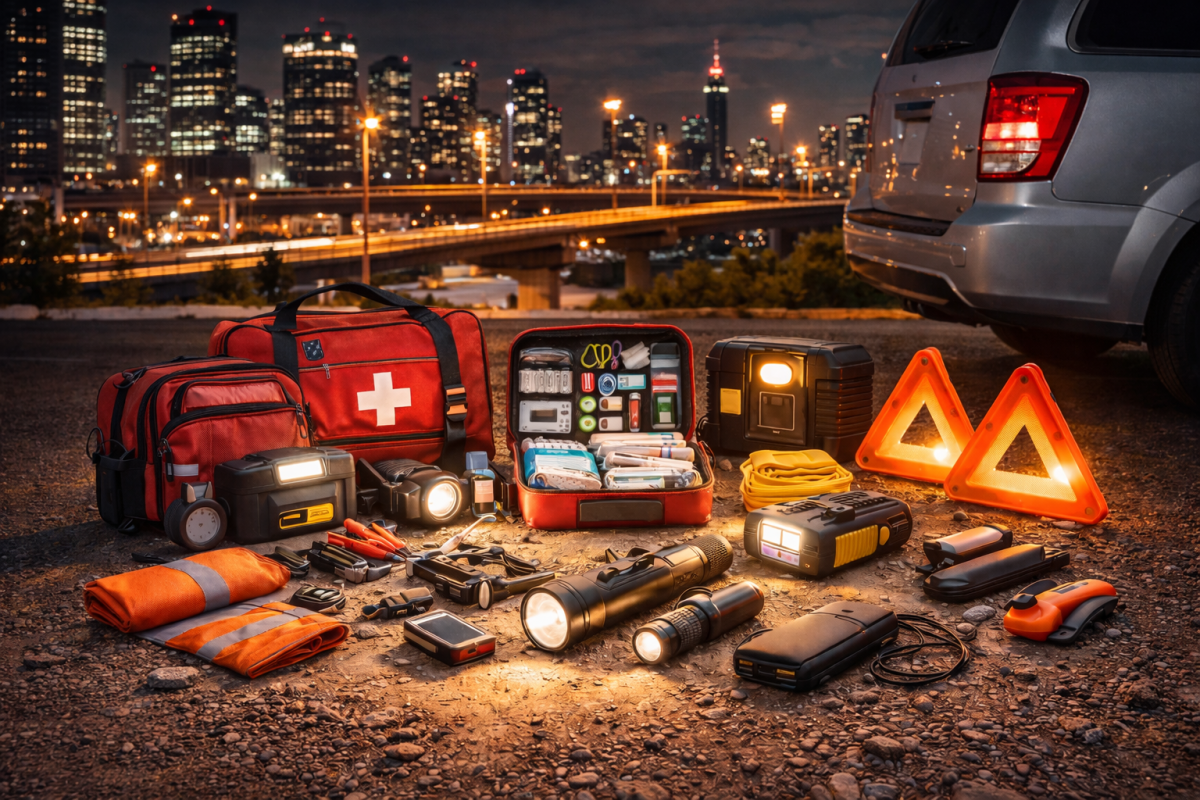
Travel safety gear includes tools that mitigate risk during unexpected events.
Preparedness improves confidence and response speed.
Safety equipment must be accessible and intuitive.
First Aid and Medical Essentials
First aid kits are medical supply collections designed to treat minor injuries and stabilize emergencies.
Kits should match trip length and group size.
Customization improves relevance.
Vehicle and Outdoor Emergency Tools
Emergency tools are mechanical or electronic devices that resolve breakdowns or signal distress.
Common tools include:
- Tire inflators
- Jump starters
- Multi-tools
Each addresses a specific failure scenario.
How Do You Pack Efficiently Without Overpacking?
Efficient packing follows a structured process rather than intuition.
The main steps include defining the scope, selecting categories, limiting redundancy, and testing load balance.
There are five steps involved.
- Define trip duration and environments
- Select one item per function
- Test weight distribution
- Remove unused items
- Validate access speed
This method reduces bulk while preserving readiness.
What Are the Biggest Packing Mistakes Travelers Still Make?
The most common packing mistakes involve redundancy, poor organization, and underestimating power needs.
Travelers pack backups they never use.
Critical items end up buried.
Lack of proper lighting, charging capacity, and safety planning causes the most frustration.
How Much Should You Budget for Travel Essentials in 2026?
Travel essentials typically cost between $300 and $1,200, depending on quality and scope.
Five main factors affect cost:
- Travel duration
- Gear durability
- Technology level
- Power requirements
- Safety equipment
Investing in core systems reduces long-term replacement costs.
What Are the Benefits of Packing Smart for Road and Outdoor Travel?
Smart packing delivers efficiency, safety, and adaptability.
There are six main benefits.
- Improve mobility by reducing weight
- Increase safety through preparedness
- Enhance comfort with adaptable systems
- Save time during transitions
- Reduce costs through durability
- Support unexpected travel changes
These benefits compound over longer journeys.
Conclusion
Modern travel in 2026 rewards preparation without excess.
Packing is no longer about lists.
It is about systems that adapt to movement, technology, and environment.
When every item serves a clear role, travel becomes smoother and safer.
The road becomes less uncertain.
And your gear works with you, not against you.